
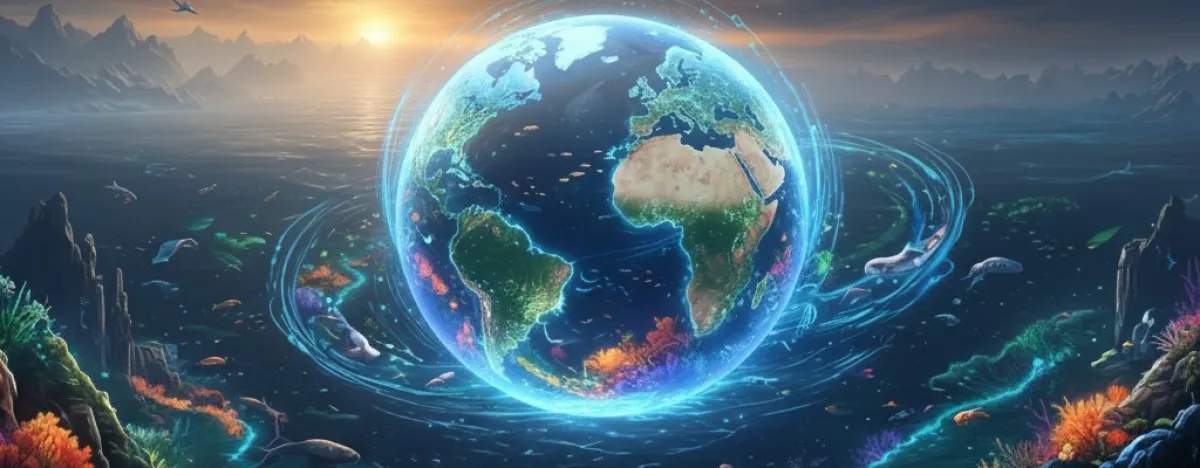
Seas and Oceans 3.1 WORLD
Where does ocean salinity mainly come from on a geological time scale ?
50% of players answered correctly.
THE CORRECT ANSWER: Erosion of continental rocks and underwater volcanic degassing
Ocean salinity is the result of a process spanning billions of years. Mainly, rainwater, slightly acidic because of atmospheric CO2, erodes terrestrial rocks, releasing ions (notably sodium and magnesium) transported by rivers to the oceans.The other major source is underwater volcanic activity and hydrothermal vents, which release minerals including chloride. Once in the ocean, these ions accumulate because, during evaporation, only pure water rises, leaving the salts behind.This cycle has reached a state of stationary equilibrium for around 1.5 billion years, where new inputs compensate for the precipitation of salts in marine sediments. The average salinity is 35 g/L, but it varies according to latitude: it is higher in subtropical zones with high evaporation and lower at the poles due to melting ice and precipitation.