
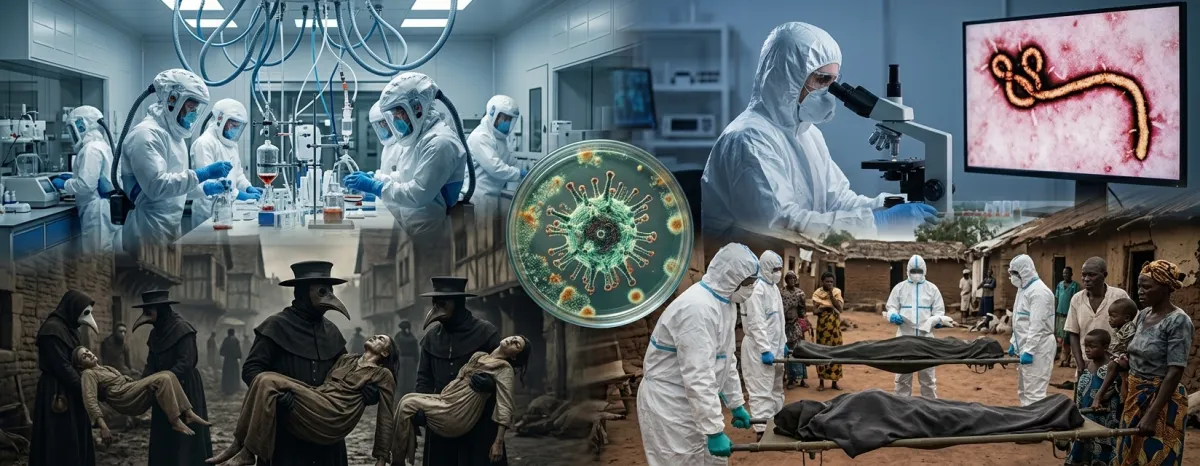
Epidemics 3.1 WORLD
Which Italian doctor and naturalist was the first to scientifically formulate the theory of contagion by invisible germs in his work of 1546?
75% of players answered correctly.
THE CORRECT ANSWER: Girolamo Fracastoro
Girolamo Fracastoro was an Italian physician, poet and astronomer of the Renaissance. In 1546, he published his pioneering work De Contagione et Contagiosis Morbis. In this fundamental treatise, he formulates for the first time the hypothesis that epidemic diseases are caused by tiny particles invisible to the naked eye, which he calls seminaria contagionis. He explains that these germs can be transmitted by direct contact, through contaminated objects or remotely by air. This scientific vision, far ahead of its time, directly challenges the ancient theory of miasmas and the medicine of moods that dominated the medical world at the time. Although it took the invention of the microscope and the work of Louis Pasteur to confirm his intuitions experimentally, Fracastoro remains considered one of the brightest pioneers of modern epidemiology and microbiology.